
Life Isn’t Short
But you don’t get credit just for showing up
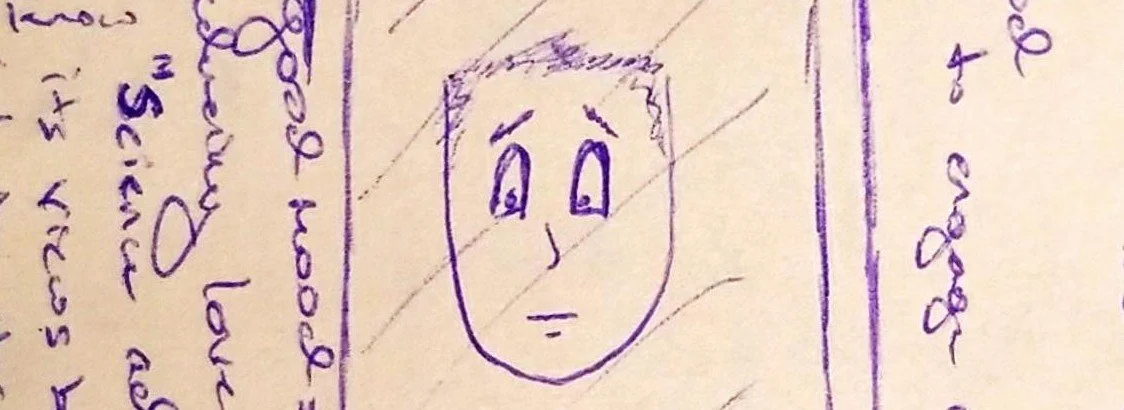
I don’t remember much before 15 years old. So far as I know, there’s no major life event that I can blame for that, but I have some theories. The prevailing one is what I call the “passenger problem.”
Whoever was driving, authority figure or fate, they laid things before me and I did them. I don’t think there was a lot of active choice in the matter. I was the first-born grandchild, so there wasn’t competition. A cousin was born a year later, so there was my built-in friend. We ended up in the same grade, even.
Then the moving started. From 2nd grade until high school, it was a new school every two years. Still, I was passive. I was so anxious, so scared of rejection, that I would sit and wait for someone to approach me.
Meanwhile, I did sports. Not because I wanted to, but because that’s what little boys do. Intercepting a basketball pass was fun, but it turns out that there’s a whole lot of other stuff in the game too. I was particularly disappointed to find that the red circle with a “W” on my baseball glove wasn’t a power-up button.
Believe it or not, you now have most of the first-hand information I have about my childhood. Given that nearly half my life (~39.5% at time of drafting) is composed of no real memories, you’d probably expect me to agree that “life is short.” Common knowledge, they say. But they say a lot of things, and more than half of them are bullshit.
Life is short, but a watched pot never boils. Make it make sense.
No response from the auspicious “they?” Fine, I’ll do it.
Warning! Science
~
Warning! Science ~
I’m a millennial in the age of AI and 2-day delivery, so I was subconsciously expecting an answer within the first three search results. After tumbling down the rabbit hole for four hours, I had to cut off my descent.
We have no ability to experience the present in anything other than vanishingly small instances of “now.” Thus, our experience of time is derived from memory. The duration of said memories is defined by a complex function which I’m boiling down to “attention-at-present.”
AaP (it’s always more scientific to use acronyms) effects “event density” when we recall something.
TL;DR See something new, cool, or terrifying? You’ll probably remember some fine details, and the moment will feel longer.
Bummer, Right?
Turns out, the reason life feels short is we get comfortable. We build routines, intentional or not that lull us into one long “event” that we remember as happening quickly or perhaps not happening at all.
Many routines are important for us because they signify safety and expertise we do not want to miss. But breaking unnecessary monotonic routines…would be a way to experience meaningful change and surprise – Marc Wittmann, Ph.D., Psychology Today
Bringing intention into habit is an effortful task. Consider the ease with which we slip into highway-hypnosis. Even if you were listening to a podcast or music, could you recall which one? What they said? How many times you skipped to the next track, or rewound because something was interesting?
That’s just human nature, you can’t be blamed for that, right? You haven’t even finished your first cup of coffee!
Let’s agree to disagree, and move on to a more pernicious example. Attention warfare is a daily reality in 2026. We could blame Netscape for inventing cookies, but where’s the benefit in that? Instead, I suggest we be aware of it.
In between human nature and attention warfare lies societal expectations. In a fast-paced world where a difference in milliseconds makes millions, there is always the pressure for efficiency. More, faster, now. Going fast isn’t the problem, it’s about who’s driving.
How to Live on 24-Hours a Day
This isn’t a new problem. In fact, Arnold Bennett discusses how we should act in the face of unconsidered routine in his short work How to Live on 24-Hours a Day (available for free at Project Gutenberg). I’ve read this book many times and even purchased a first edition that’s falling apart on my bookshelf.
Perhaps there wasn’t social media or a 24-hour news cycle, but…
Newspapers are produced with rapidity, to be read with rapidity. There is no place in my daily programme for newspapers.
And who isn’t familiar with this feeling
…[You] emerge from your office. You are pale and tired… During the journey home you have been gradually working up the tired feeling. The tired feeling hangs heavy over the mighty suburbs of London like a virtuous and melancholy cloud, particularly in winter...
[In] about an hour or so you feel as if you could sit up and take a little nourishment… Then you smoke, seriously; you see friends; you potter; you play cards; you flirt with a book; you note that old age is creeping on; you take a stroll; you caress the piano... By Jove! a quarter past eleven.
You then devote quite forty minutes to thinking about going to bed; and it is conceivable that you are acquainted with a genuinely good whisky. At last you go to bed, exhausted by the day’s work. Six hours, probably more, have gone since you left the office— gone like a dream, gone like magic, unaccountably gone!
You see? Now that I’ve proven conclusively that, despite being long dead, Mr. Bennett’s thoughts are not so dismissible as a boomer’s career advice. So, then, does he have something beyond judgement and accurate descriptions of mundanity?
Of course. Why the hell would I be talking about it otherwise? Speaking to the symphony-goer who thoughtlessly taps their toe, but leaves the experience unexamined he suggests:
[If] you have read, say, Mr. Krehbiel’s “How to Listen to Music”… you would next go to a promenade concert with an astonishing intensification of interest in it.
Instead of a confused mass, the orchestra would appear to you as what it is—a marvelously balanced organism whose various groups of members each have a different and an indispensable function. You would spy out the instruments, and listen for their respective sounds.
You would know the gulf that separates a French horn from an English horn, and you would perceive why a player of the hautboy gets higher wages than a fiddler, though the fiddle is the more difficult instrument.
You would live at a promenade concert, whereas previously you had merely existed there in a state of beatific coma, like a baby gazing at a bright object.
Read the book, it’s worth it, but let me help you out if you prefer to just read my 1,200 words: it all comes down to self-awareness. I’ll agree that it’s harder today than back then, but at the same time encourage you not to make the center console into Everest.
The driver’s seat is right there.
Self-Awareness is a Superpower
I’m the custodian of my attention. It’s incumbent upon me to be self-aware, to respect my attention like the valuable resource it is.
When I began honoring who I was and what gave me joy — right around fifteen — my memories crystallized. I can still feel the cold, painted concrete walls of the D wing, the resonance of drums and improvised vocal harmony in a breezeway, and quiet moments laying on the stage before rehearsal “just hanging out.” The moments weren’t just experienced, they were lived.
“Life is short.” Lol. Fuck that, life is as long as I believe it is.
I’m driving.
Don’t touch the radio.
From the Rift,

I’ll leave you with a clip from Rescue Me that started me down this warpath over twenty years ago. It still hits as hard as it did when I first saw it.
Curious what’s on the radio? Tune into My Personal Delta to learn where my self-awareness journey started.
P.S.
For those of you who get off on saying sentences with large words you only mostly understand, Here’s some choice links to academic articles with some ammunition:
“Hippocampal activity during the encoding of boundary items also relates to successful boundary recall when retrieval is cued by a pre-boundary item. This finding suggests that, during sequence learning, hippocampal activity at event boundaries may signify the strategic retrieval of pre-boundary information and, thus be associated with a greater binding of pre-boundary to boundary representations.”
Prefer to listen? Subscribe on Apple Podcasts, Spotify, or using the RSS feed
