
Four Hit Points and Fourteen Months
You Can’t Buy That Kind of Synergy
Cheating Death by Die
The lime-green digital die tumbled across the board with a simulated skip, landing on four, the same number of health points I had remaining. In the final battle of our GURPS arc, our Game Master had really upped the challenge.
The campaign was set in turn of the century Louisiana, and my character, a pudgy stunt-girl reporter named Elloise LaRue Thibodeaux, had shot the monster threatening an NPC across the room, trading his safety for her own. She’s quite brave, don’t you think?
“Roll health,” the GM instructed.
As any TTRPG player will tell you, saying a cool line and getting the last shot are worth something.
I passed my roll, staying up for another turn. But, I’m last in initiative. First player has to spend an action reloading. Second player does the same. I can hardly believe it, I get my moment!
“Elle stumbles after the strike, but stays up. She raises her .45 Peacemaker at the beetle beast, massive claws dripping in her blood. ‘It’s rude to touch a lady without askin’.’”
Elle’s a good shot. The beast goes down. Initiative ends.
“Roll health.”
I pass again. The group shuffles, reorienting in the dark basement after the danger has passed. “Doctah?” Elle asks.
“Roll health.”
Her luck runs out, and in a moment that truly can’t be replicated, My computer crashes. Screen Black. For ten seconds, all I hear is my dog licking herself.
You can’t pay for that type of synergy.
This moment, roughly two minutes of a two-hour battle, took fourteen months to cultivate. Along the way, the thrills and challenges weren’t constant. There were lulls, missed beats, and awkward moments. Going from a high fantasy campaign to the real world took getting used to, even for a group who’s played together for years.
In addition to these organic beats, there were soft, quiet beats designed by the GM or initiated by the players. Moments that were “unnecessary” or “boring” from the outside.
That’s how I’ve always played.
Nah, I wouldn’t lie to you. My first character was stereotypical as fuck. Loner, dead family, brooding in the corner of the obligatory pub like a moody teen’s wet dream. It didn’t work. You don’t play TTRPGs to have the story in the background. You play them to tell the story.
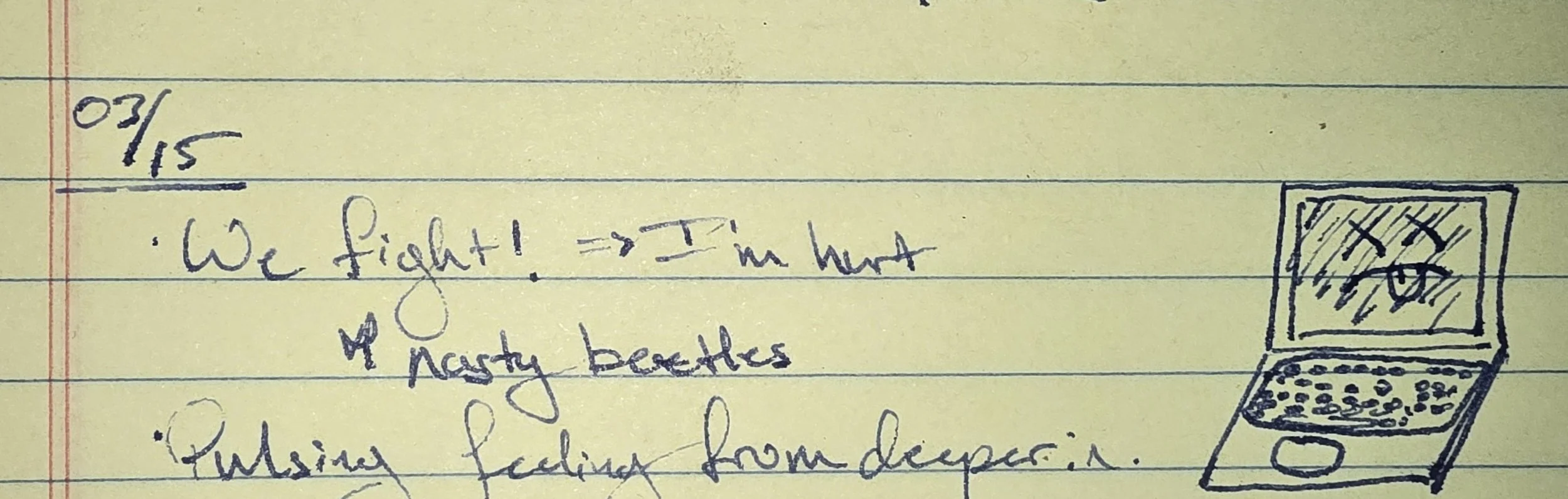
I’m not the note taker of the group, as you can tell.
Evidence of Absence
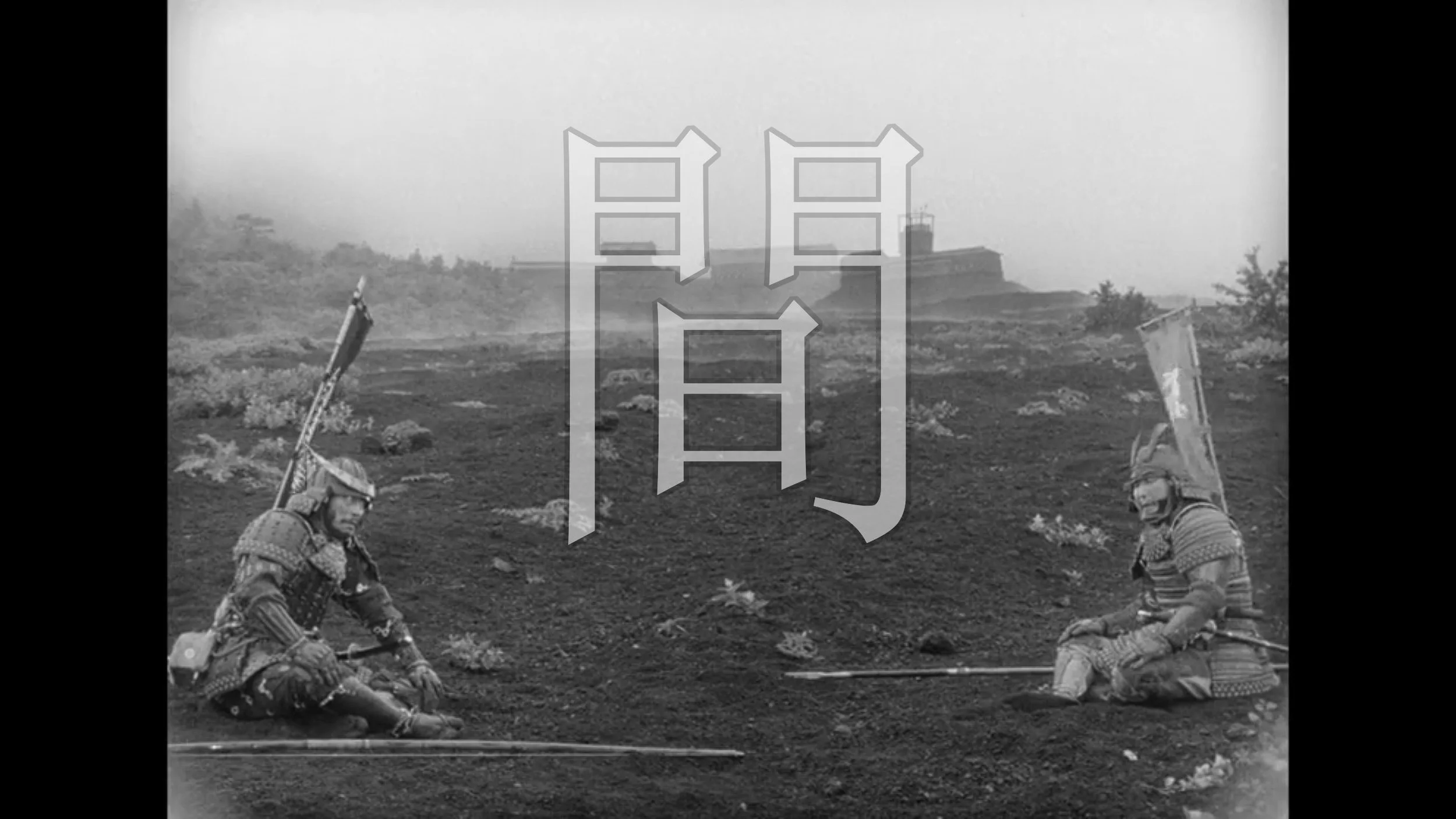
I didn’t have a name for it. The strange magic of how patience can be a currency for certain kinds of enjoyment. Not until hearing a conversation between Dungeon Masters Brennan Lee Mulligan and Matt Mercer the morning before our GURPS session. They discussed Akira Kurosawa and "Ma" – negative space. Those beats, devoid of direct action, are just as critical as the big emotional moments we dream to enact. Inspired, I watched Throne of Blood and immediately realized two hurdles. The first was to avoid blabbering on about the beauty, brilliance, and nuance of the film. Anyone who's a fan of Kurosawa will be familiar with the struggle. The second issue was saying something interesting and new. If you want to read about Kurosawa’s use of techniques and styles from Noh Theater and Sumi-e, I found this article from Criterion to be particularly interesting.
I’m not looking to rehash existing ideas, I’m trying to incorporate them in hopes of better understanding the world. Instead of focusing on what Ma is and how Kurosawa accomplishes it, let’s look at what Ma does.
Calibrating Violence
Most of us are dopamine junkies. I know I am. It’s basically a silent opioid crisis, and none of you are the dealers in this scenario.
Enter John Wick, lighting up our emotions with a dog death, then kicking us into full gear with an all-out death fest. Out of bullets? No need for the action to stop, throw the gun at your assailant and pull out another. If John Wick was a TTRPG character, he would not be considering the weight of his inventory.
And yet, there is still Ma used in the film. It’s the most recognizable form in western media: the quiet before the storm, reloading and repositioning, and the silence after a fight punctuated by the dull thud of bodies hitting the floor.
One quote from the conversation between professional Dungeon Masters keeps rolling around in my head. Brennan Lee Mulligan, paraphrasing Akira Kurosawa, says:
“If I don't let you watch the rainfall on this peaceful village, how will you know what violence is?”
Did everyone get chills, or just me? Those Ma moments are what allow the twentieth dopamine hit to go as hard as, or harder than, the first.
Absence is relative to everything around it, bringing depth and context.
Bending Light
Awkward silences. If you’re one of those weirdos who doesn’t feel them, you’re going to have to flex your imagination to get this section.
When there are no words, no movement, your attention goes to other places. Consider how, during these awkward moments, your mind springboards from one thought to another, each vying for the coveted role of bursting from your mouth.
Your attention has nowhere obvious to go.
In narrative, our attention is narrowed from the infinite detail of the world around us, to the plain of a screen, the curve of a page, or the collaboration of others. Whether director, author, or GM, the architect guides our attention.
Does it turn inside, like when the men are lost in the fog with tension pulled tight in our chest? Maybe it’s external as we observe a character’s eyes linger on item which bears the weight of memory and consequence. It could even be the idea that springboards from your character’s mouth in the awkward first moments of a campaign. In silence, meaning can condense into something real and tangible.
Absence is a parry that can redirect our focus.
A Vessel of Meaning
Throne of Blood was not designed with millennials in mind. I consider myself to have a longer attention span than many in my generation compatriots, but even still – this movie is asking a lot. Long stretches of fog-filled landscape shots, discussions about battle, two men getting lost in the woods, all important elements of the film. It took effort not to pick up my phone, but I didn’t and this isn’t bragging (it is a little bit).
This is more like our GURPS table than you might think. We were in a basement with only a cone of visibility. We can only speak in one-second bursts during our initiative, resulting in NPCs crying out in pain from the darkness, followed by eerie silence. Perhaps most similar was my companions’ need spend a turn reloading, unable to fire on the beast that had nearly taken me down.
The tightening in our chests as we watch isn’t just the desire to scroll social media, it’s mirroring the growing tautness in the narrative.
Absence can hold as much meaning as action.
My Ma
In GURPS, we track every bullet, stat, and point of health, but that isn’t the story. The space between numbers is where characters become real, and moments earn value that doesn’t fit on a page.
The next time I watch the dice tumble across my screen, I’ll relish the silence under the pitter-patter sound effect. Something big is coming, I just have to wait for it.
From the Rift,

Prefer to listen? Subscribe on Apple Podcasts, Spotify, or using the RSS feed
