
Passion Isn’t About Success
It’s the difference between loving the work and needing it to matter

Image by Bronisław Dróżka from Pixabay
Have you ever known someone with a singular passion?
I’ve always been tempted to believe they’re merely a fabrication, meant to juice stories or used in some other grand manipulation. But we hear anecdotes that confirm it all the time. Like a brain surgeon who has wanted to be a doctor since she was five, or an astronaut who’s dreamed of going to space as long as he can remember.
Even that’s putting the bar too high. Passion doesn’t mean success. There are countless people striving for something they want desperately who may never achieve it.
The idea of passion fascinates me. I can remember high school, daydreaming about what it would be like to care that much about something. To work, sacrifice, and push beyond your limits. I didn’t have anything like that. Even the things I enjoyed didn’t have the weight of passion to them. I shirked competition because it turned me into a beast.
Was that the best I could hope for?
Maybe confusion was what made it so interesting, but sometime last year, that changed. I found my passion, and I’m starting to realize it’s a good thing it took so long.
Passion v. Ambition
The way I’ve outlined passion above is a bit too ambiguous. Ambition is a close cousin, and I feel I may have entangled them a bit. First, definitions:
Ambition is a character trait that describes people who are driven to better their station or to succeed at lofty goals.
---
Passion denotes strong and intractable or barely controllable emotion or inclination with respect to a particular person or thing.
The most important word above is “succeed.” That’s the core difference between passion and ambition – passion is about process, ambition is about outcome. Still, this feels a bit thin for me. Let’s beef up my dictionary deductions with some big-brain science.
Robert Vallerand proposed the Dualistic Model of Passion, in which he splits the emotion into two distinct presentations: Obsessive and Harmonious.
Obsessive passion is likely the kind that comes to mind. For example, a driven hockey player who casually asks for a ride to the hospital from their friend because the coach said they shouldn’t drive themselves (lest they risk losing sight in their left eye) but shows up for practice the next day (this is a true story). We love to put these people on a pedestal or burn them on pyres. We claim this kind of drive is what makes success possible and blame it for failure.
Vallerand says obsessive passion results from a “controlled internalization” that “originates from intra and/or interpersonal pressure typically because certain contingencies are attached to the activity such as feelings of social acceptance or self-esteem.”
On the other side, harmonious passion is much quieter. Think of the dedicated artist working on a construction crew who never goes to lunch with the team because she’s designing a graphic novel in her spare time. Vallerand proposed harmonious passion results from an “autonomous internalization” which “occurs when individuals have freely accepted the activity as important for them without any contingencies attached to it.”
We don’t usually hold these people highly until they have “made it.” Often, they’re invisible or even “weird” for being antisocial. That drives the point home for me. When you don’t need external validation to maintain your love of work, when the external signals may even push you to stop your work, if you choose to continue, that’s harmonious passion.
“External validation” is most often a signal in our world, obtaining money, but it doesn’t have to be. I watched one of my favorite movies as a case study on passion, and it serves as a lovely example.
One of the Greats
Whiplash explores the obsessive passion of a young drummer, Andrew, attending the best music school in the country. That’s visceral. It’s common knowledge that any art must be a passion, since it’s so unlikely to make money.
Or is that just the story that gets told? Not the money part, that’s for sure true.
Is Andrew driven by passion? Looking closer, the script literally tells us what Andrew wants.
ANDREW (CONT’D)
Because I want to be great.NICOLE
And you’re not.ANDREW
I want to be one of the greats.
That’s not about drumming; it’s about a definition of success. The movie expressly shows this wasn’t always the case. We see a childhood video of Andrew playing the drums joyfully as he’s encouraged by his father behind the camera. Children aren’t thinking about being “one of the greats,” even if they’re talented. They just play. In the same scene, and throughout the movie, we see the only picture on Andrew’s wall is Buddy Rich playing through a face of pain.
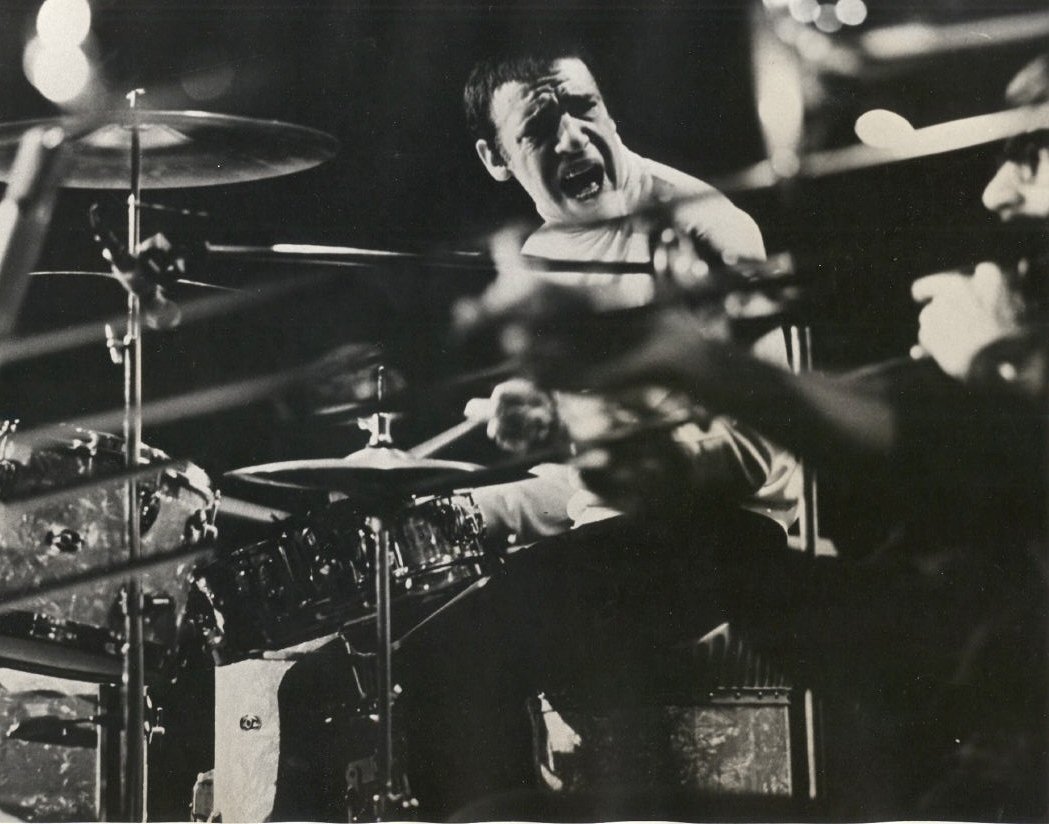
The image Andrew grew to worship
SPOILER ALERT:
Whiplash is about a boy for whom passion and ambition became tangled through admiration, and the cost of pursuing it. The end of the movie has Andrew performing, all his talents and earned skill on display as he takes control over the situation. He makes a choice to endure the suffering, to take the path of ambition, which may lead him to “dying in a gutter with drugs in his veins” so long as it means he’s “one of the greats.” The director said he wanted to make the happiest sad ending possible, and when you see the shot of Andrew’s father in the wings during his amazing performance, you see a man who has lost his son forever. Great music, though.
SPOILER ALERT CONCLUDED. THANK YOU FOR YOUR COOPERATION.
This happens to a lot of people. Success usually isn’t just about money but it’s a convenient marker. If you loved helping people as a child, associated that with being a doctor, and became a doctor, the size of your house could be an indicator of how good you are at helping people.
Maybe you relish each person you help or perhaps it’s each dollar you collect that signals your value; no one can know. Hell, you may not know. You’ve won, after all, and we rarely evaluate how we’ve won.
No need to think about why, obviously it was your passion. (That last part was sarcasm, if you didn’t catch it.)
Finding Passion Later in Life
I spent a long time going the wrong way in life. It wasn’t because of ambition, but it damn well could have been. Ever after I realized I could slide into the driver seat, it took me a good twenty years to realize how to read the map. I grew warped and gnarled under the suggestive winds of others who didn’t understand who I was or what I valued.
That’s why I think it’s good that I found writing later in my life, after my limbs had lignified. My youthful mind was tied into the traditional ideas and markers of success. Just like in the case of Dumboy, I would have been working on creating the best product, instead of enjoying the singular pursuit of perfection.
I’ve been practicing here and there forever, but I didn’t know I loved writing until 2024. Sometimes my brain tries to make that into a sad story, and then I say, “hey there buddy, knock it off! I mean… Thank you, but no thank you.” I’m working eliminating the first part. Finding my passion later protected it from being shaped by ambition.
I’ve pushed through the hard part of writing; I’ve made it a habit. I’m about 80% of the way to enjoying all of it (revisions can be painful and writing when you don’t feel like is a struggle). That’s the meaning of passion for me, loving as much of that thing as you can. I have goals I’m aiming for, and I’m sure they’ll grow and evolve with my practice, but failure to reach them would not be a failure in my passion.
Despite the wind, I grow toward the sun.
From the Rift,

Thanks for Reading
Prefer to listen? Subscribe on Apple Podcasts, Spotify, or using the RSS feed
