
A Convenient Theory of History
It’s obvious when you think about it.
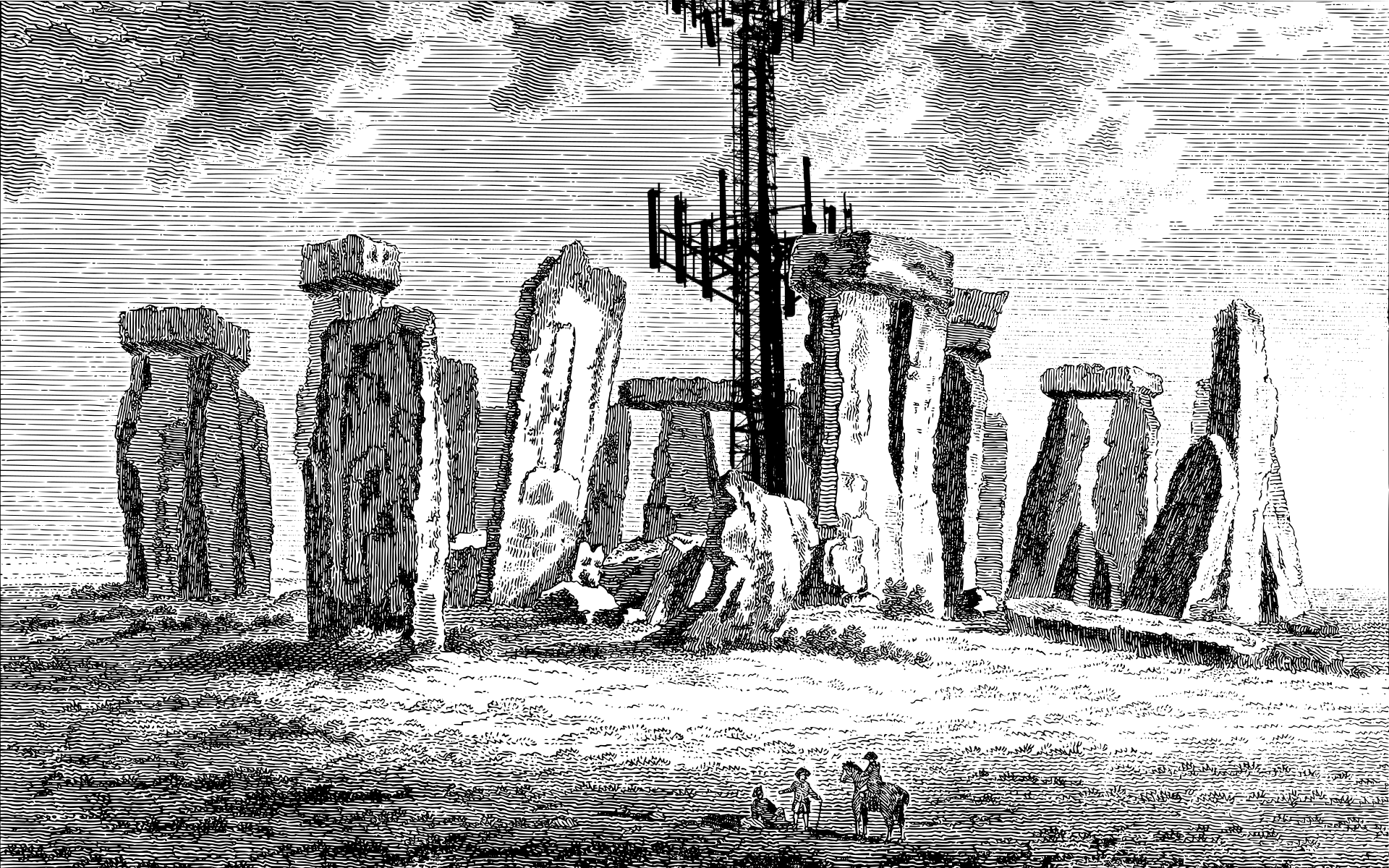
We assume the grand and mysterious structures of the ancient world to have been constructed for equally grand ambitions: religion, astronomy, legacy, the afterlife, what have you.
Feh!
After surveying the monuments of our current civilizations, the ones I suspect residents of the far-flung future will gaze upon and wonder at their purpose, most of them seem dedicated to the noble pursuit of saving me a few steps. So far as my limited mind can discern, most advancements made over the last few hundred years have proposed that life should be easier, or at least more convenient.
We’re no better than our forebears, we just have more bodies to throw at the issue.
I wonder, then, were these ancient societies merely seeking ease and convenience as well?
Perhaps Stonehenge is an inscrutable acoustic antenna, allowing communication at great distances via a whistle or some other such compostable, transient tool. That would be quite convenient indeed! Certainly, it’d make the construction worth the trouble. Just think of the benefits! We all know an Ugg... would you trust Ugg with your sister’s pelt? Stonehenge relay station would be far more reliable.
How about the pyramids? I doubt there’s a Dunkin’s in there, but remember how big computers were in the 70’s? Maybe they were just massive computers. Wouldn’t that be convenient? We’re all too eager to call a boat a boat because swimming is so hard, but the Egyptians couldn’t have invented a computer?
We already know that many of these sites of majesty and scale were constructed with human sacrifice in mind. Who’s to say this wasn’t a solution of convenience? I doubt one requires a particularly spectacular place to behead a child but consider the parents.
Parents, even those few who are truly devoted to the blood-hungry gods (or it may be the priests who’re blood-thirsty, it’s hard to tell), might find the public execution of their child distasteful. However, what if the child is way up high on a structure? So far away, in fact, that one might question if this actually was their child. And high, I’m talking real high – like an important person.
Now the architects can think about the crucial factors: acoustics and sight lines. The priest can focus on pageantry! And critically, the artisans can leverage their skills of color to pick the perfect shades of blue and yellow to make the child’s blood appear an almost other-worldly red.
Doesn’t that have the ring of convenience to you?
I could go on. Petra could simply be structurally integral to the mountain into which it was carved – it’s more common that one might imagine that the earth needs a bit of finish work. Machu Picchu was built because star-gazers kept falling asleep there and decided to build homes. Noushabed is the easiest to explain – it’s cooler underground.
We’re still on the same path, albeit more sophisticated looking. Imagine digging tunnels for highways using dynamite or just think about all the math that went into keeping a satellite in orbit just so we could finally stop using maps![1] Jesus, have you ever tried refolding a map? What a nightmare.
Once you understand the allure and value of convenience, all human history becomes undeniable.
We’re no better than our forebears, we just have more bodies to throw at the issue. Just think what Persia or the Mongols or even plucky Rome could have accomplished with a couple billion more people.
I bet one of them could have figured out the combustion engine.
From the Rift,

[1] And no small amount of dick measuring either.
Thanks for Reading!
Prefer to listen? Subscribe on Apple Podcasts, Spotify, or using the RSS feed
