
Missing the Garden for the Peas
Remembering that all levels of attention are important
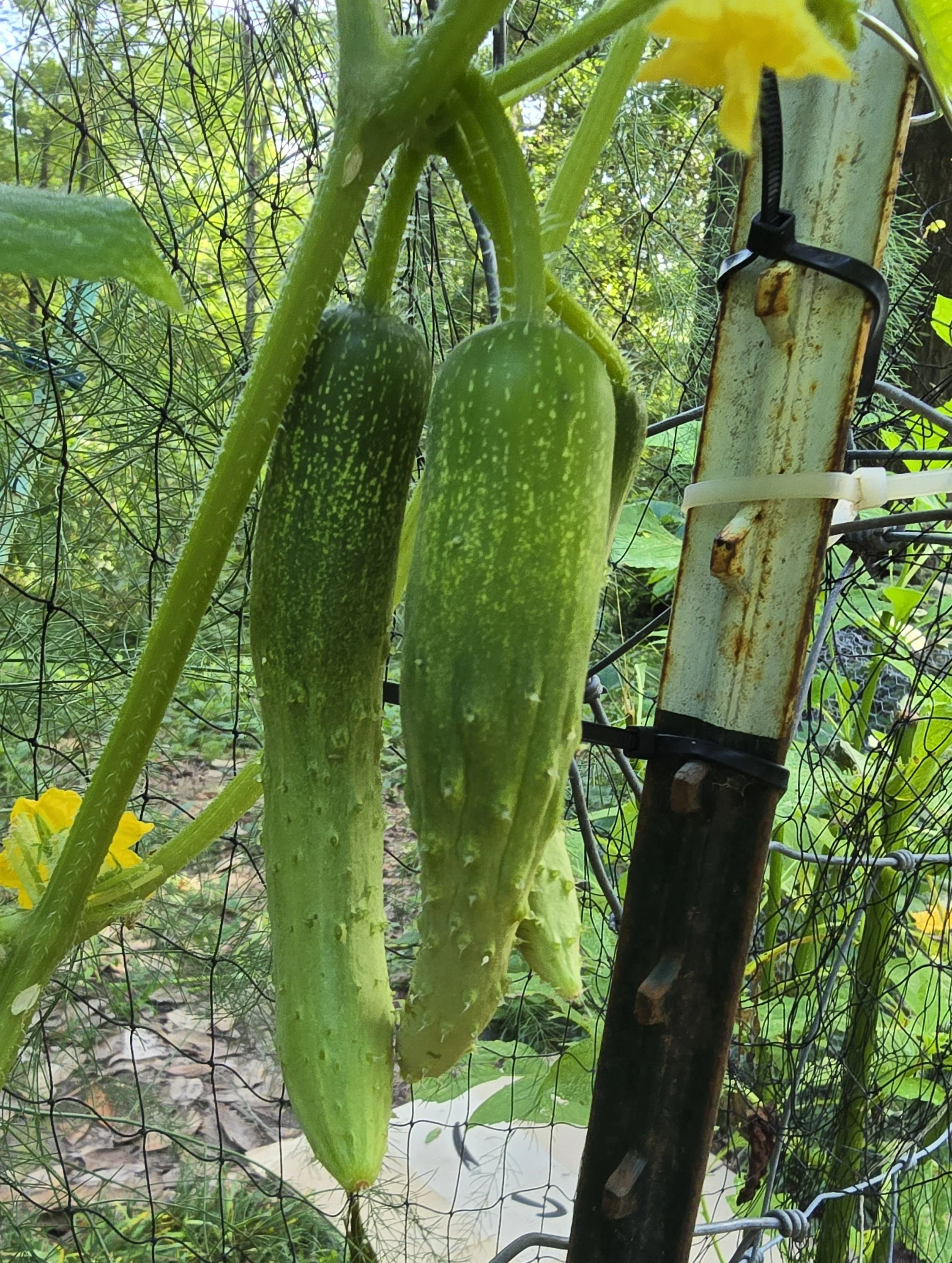
I’m half automaton when I wake up. First thing in the morning is the perfect place for routine. I put on pants (a critical step), then I ignore how badly I need to pee and make my coffee in a moka pot. As the pressure in my bladder grows, I fill the dog bowls.
Coffee in the mug, grounds in the compost, the moka pot gets washed, and I let the dogs onto the porch as I set up my outdoor desk. Let me tell you, that first piss is incredible.
After my morning writing, when the sun has lit the earth’s stage, I holster my garden notebook and clippers before walking the greenhouse. I check on my seed starts, my cloned tomatoes, and the various clones in water or sand from around the property.
I take note of any damaged or yellowing of the leaves, sometimes turning over each and every one in search of the responsible parties. I dusted the tomatoes with diatomaceous earth last week after flea beetles had eaten one of my best performers. The white dust that lines both leaves and soil looks like a fad frosted donut.
I go slowly. Sometimes I’ll leave and reenter the greenhouse several times having remembered that I’d forgotten something, only to forget and remember it several more times in quick succession. Once complete, I move on to the annual garden – a 20x20 fenced in square of straight mounts and strategic trellises. It’s not full enough for my taste, but I’m new at this and listened to the seed packet recommendations for spacing (lessons learned).
I walk through the paths, inspecting the new growth. I bend down next to each plant, touch the leaves, lean my head at different angles, count bean pods, and prune yellow leaves. I take out my notebook and write, “Lots of male flowers, still no female.” I store the book and stand from my inspection of the straight neck squash.
The tendergreen beans are happy, as are the blackeyed peas. My brown furrows, noticing the dark green pods for the first time. How had I missed them? I cock my head. I guess I’d never seen black eyed pea pods before. They’re long, almost unnaturally so. Like boneless alien fingers.
I wish I hadn’t thought that. I chuckle then inspect each small plant, noting which are prolific or problematic. Not every seed that pops becomes a papa.
I prune the pumpkin to keep it growing in a straight line. I don’t have the space for a patch. I hope I don’t regret this big ole vine. The purple hull pea plants are growing strong. They finally have flowers.
Judy loosed the eggplant from the trellis when she picked a ripe one. Now it’s leaning over. I’ll have to build a new trellis around it. The second one is fine. I wonder why so many of the flowers aren’t pollinating, though.
The python bean seeds all popped! Great. No Armenia cucumbers, though. I wonder if that’s because of all the rain. Okra is growing slow. Maybe that’s normal. I should google it. The other squash is fine, but they don’t have female flowers either. Weird.
Now for the treat.
I round the row then walk to the trellised and netted section I’ve filled with my tomatoes. They’re producing, and I get to harvest. But duty comes first. I trace each branch and node. “Ha, gotcha!” I pinch a sucker, a leaf that will grow into a new branch if left unattended. Tomatoes are a persnickety bunch, you have to set down the law and make them live by it.
In the corner, one of my plants is suffering. Half the leaves yellowed overnight. I prune and toss them clear of the garden. There are only two green sets of leaves left. One of them has thrown a sucker. I’m hoping it grows.
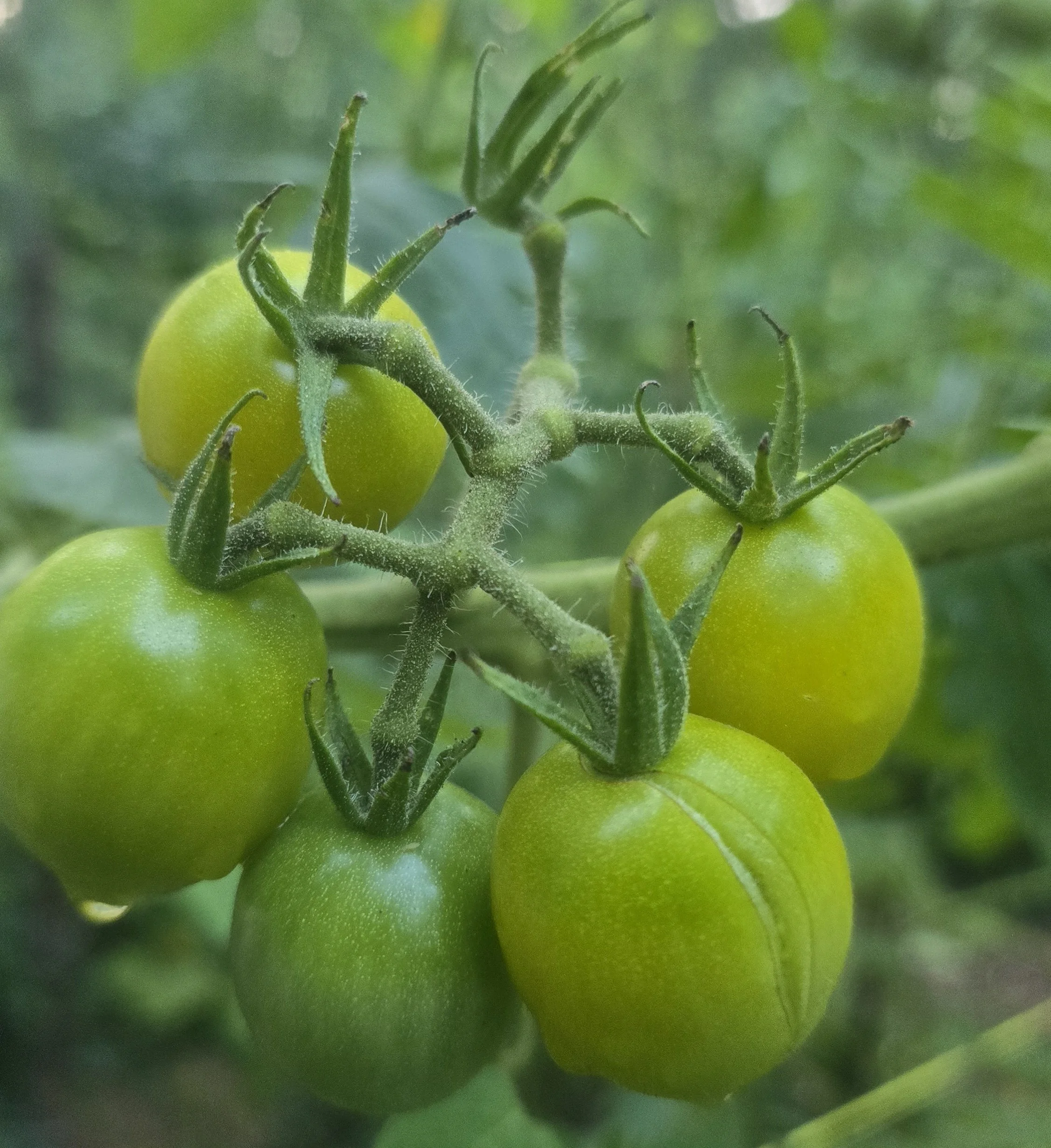
Left on the vine one day too long
I harvest the tomatoes with a bit of yellow or red on their base. I used to think you wait until they’re ready to eat but turns out they might split if you wait too long. Even still, with all the rain we’ve been having, I’ve had more than one split. Still edible, but less pretty. Aesthetics is important.
I turn, dropping one of the yellow globes from my hand. When I rise from picking it up, I catch a glimpse of the whole garden. It sends a shock through my system, like being sprayed with a cold hose.
It’s beautiful.
How had I missed it? I suppose this is the downside of being scrupulous. I walk to the entrance to the tomato room and look over the garden without the veil of bird netting.
When inspecting these plants, I see leaves with holes and partially grown beans, I see three-foot gaps between plants that should be filled with edible groundcover. I see squash plants with no female buds. I see tiny seedlings pushed to the ground by pelting rain. I see stalled or failing seedlings and plants falling over from lack of support.
But right now, it doesn’t look sparse and weak. It looks successful. Pride blooms as I catch a glimpse of what other’s see when they visit. Somehow, I miss it even when they point it out.
I’ve seen this cycle so often, it’s more fascinating than maddening when it reappears. Perhaps it’s even stranger when I’m the outside observe of my own work, like when I step away from my writing for a few months and read the entire work with new eyes. This usually happens after I hit the wall of, “this sucks, and I hate it.” When I return, it’s like I’ve become my friends visiting my garden.
“Oh, look at this! I love what you’ve done here. This is a nice addition. I see what you’re going for.”
Honestly, I like it. We need to see both the details and the whole, after all. It’s the details that make a world feel alive, but the entire world has to exist for the detail to be there. Likewise, you have to take note of the leaves of your plants, but a single green bean isn’t a meal. It’s called a “garden salad” not a “plant salad.”
From the Rift,

Thanks for Reading!
Prefer to listen? Subscribe on Apple Podcasts, Spotify, or using the RSS feed
